
Jen Feinberg – Lessons from the Trenches
I discovered MBCBrainMets.org while searching for hope and education following my first brain mets diagnosis in the Fall of 2021. At that point, I had been living with HER2+ metastatic breast cancer for about eighteen months and had just reached a point of stability following my first line treatment. I was shocked to learn that while I was stable from the neck down, I had developed approximately ten brain mets that were not there at baseline. I scoured this site reading patient stories to learn how others navigated the treatment options. It was such a valuable resource; I did not realize it was in its nascent stages. Now four years later, I am honored to share a few lessons I’ve learned along the way in hopes that it could help someone else.
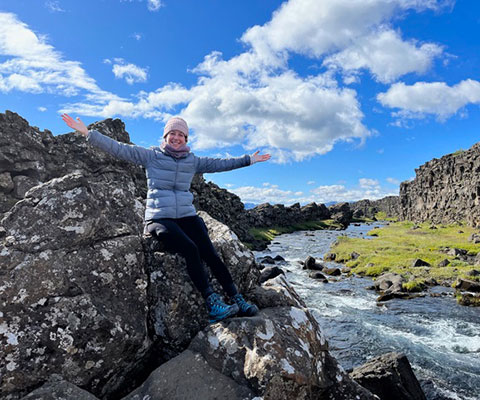
I continue to live a full life
I was first diagnosed with an early-stage, non-invasive breast cancer at the end of 2017. At the time, my daughters were 6 and 9 years old. In early 2018, I had a bilateral mastectomy and began hormone therapy. Despite this aggressive initial treatment, the cancer spread to my lungs, liver, and bones. In just two years, I had gone from Stage 0 to Stage 4. Eventually, I received the terrifying news of brain mets and have experienced progression in my brain several times. I am currently on my seventh line of systemic therapy and have had numerous rounds of targeted (SRS) brain radiation.
As I write this, my girls are now 14 and 17 years old. While I am now a retired professional and full-time cancer patient, I still live a very full life as a 49-year-old wife, mother, daughter, sister and friend. Thanks to my amazing care team and incredible husband, I have been able to support my daughters through elementary, middle, and high school. We still host large family holidays. We travel as much as possible, and we have learned to keep planning for the future. On good days, I am a fully engaged mom and even cook dinner. On harder days, I allow myself to rest. I like to remind myself that I am modeling for my now teenagers how to live in the face of adversity, and I hope to teach them that they too can handle hard things that come their way.
I try to be open and transparent with my children in age-appropriate ways. As they’ve grown older, their understanding of the gravity of my diagnosis has evolved. Over the years, they have asked “Mommy, are you going to die while I am away?” My go-to answer has always been, “that’s not something my doctors and I are worried about right now, but I’ll be sure to let you know if anything changes.” In my experience, living with MBC brain mets has been a marathon and not a sprint. We have no idea what the future will hold, but we carry on and continue to celebrate every milestone.

I have found purpose in my diagnosis
Approximately six months after being diagnosed with MBC, I discovered that fundraising for research is a powerful coping strategy for me. Sharing my story publicly lifted a weight off my shoulders and provided a way for my friends and family to rally around me. By harnessing the power of collective giving, my community has raised an astonishing $1.5 million for research and awarded annual grants focused specifically on advancing new strategies to prevent and treat breast cancer metastasis to the brain and central nervous system.
Fundraising has also helped me find purpose in my diagnosis and allows me to exert some control when I have so little. None of us has any way of knowing how our bodies will respond to treatment, but by supporting the work of scientists and doctors seeking the next breakthroughs, I feel I am making a difference and doing something proactive to help combat this awful disease.
Throughout my journey, I have been lucky to find mentors, role models, and friendship from others in the MBC community. At first, I was reluctant to engage for fear of losing friends, but now I am extremely grateful to the thrivers and allies who help us learn and connect – especially through platforms like this one. These relationships have shaped my perspective and the trajectory of my care. I am grateful to those who have come before me, and I am eager to support those who are finding their way. While life with cancer is not always easy, it is a life I still want to live.


